
Seoul Climate Card 2026: The Best Transit Card for Tourists Explained
Photo by Pexels
If you're visiting Seoul in 2026, there's one thing you should buy before anything else: a Climate Card (기후동행카드). This new transit pass gives you unlimited rides on Seoul's subway and buses for a flat daily fee — and it can save you a surprising amount of money.
Here's everything you need to know.
What Is the Climate Card?
The Climate Card is a rechargeable transit card introduced by the Seoul Metropolitan Government. Originally designed for Seoul residents as part of a climate-friendly transportation initiative, it's now available as a tourist pass as well.
Instead of paying per ride (which can add up fast when you're hopping between neighborhoods), the Climate Card lets you ride as much as you want for a fixed price.
How Much Does It Cost?
| Pass Type | Price (approx.) | Coverage |
| 1-Day Pass | ₩5,000 (~$3.50 USD) | Unlimited subway + bus |
| 3-Day Pass | ₩12,000 (~$8.50 USD) | Unlimited subway + bus |
| 7-Day Pass | ₩20,000 (~$14 USD) | Unlimited subway + bus |
| Card deposit | ₩3,000 | Refundable when returned |
Note: Prices may vary slightly. Check the latest pricing at Seoul Metro or convenience stores when you arrive.
Is It Worth It? Let's Do the Math
A single subway ride in Seoul costs ₩1,400–₩2,000+ depending on distance. If you're a typical tourist visiting 3–5 neighborhoods per day, you'll easily take 6–10 rides daily.
| Scenario | Pay-per-ride (T-Money) | Climate Card |
| 6 rides/day × 7 days | ₩58,800+ | ₩20,000 |
| 8 rides/day × 3 days | ₩33,600+ | ₩12,000 |
| 10 rides in 1 day | ₩14,000+ | ₩5,000 |
The savings are clear. If you ride more than 3–4 times per day, the Climate Card pays for itself.
Where to Buy the Climate Card
- Convenience stores — CU, GS25, and 7-Eleven locations throughout Seoul (the most convenient option)
- Subway station kiosks — automated vending machines at major stations
- Incheon Airport — available at convenience stores and information desks in the arrivals area
How to activate: Simply purchase the physical card, choose your pass duration, and tap it at the subway gate or bus card reader. It activates on first use.
Climate Card vs. T-Money Card: Which Should You Get?
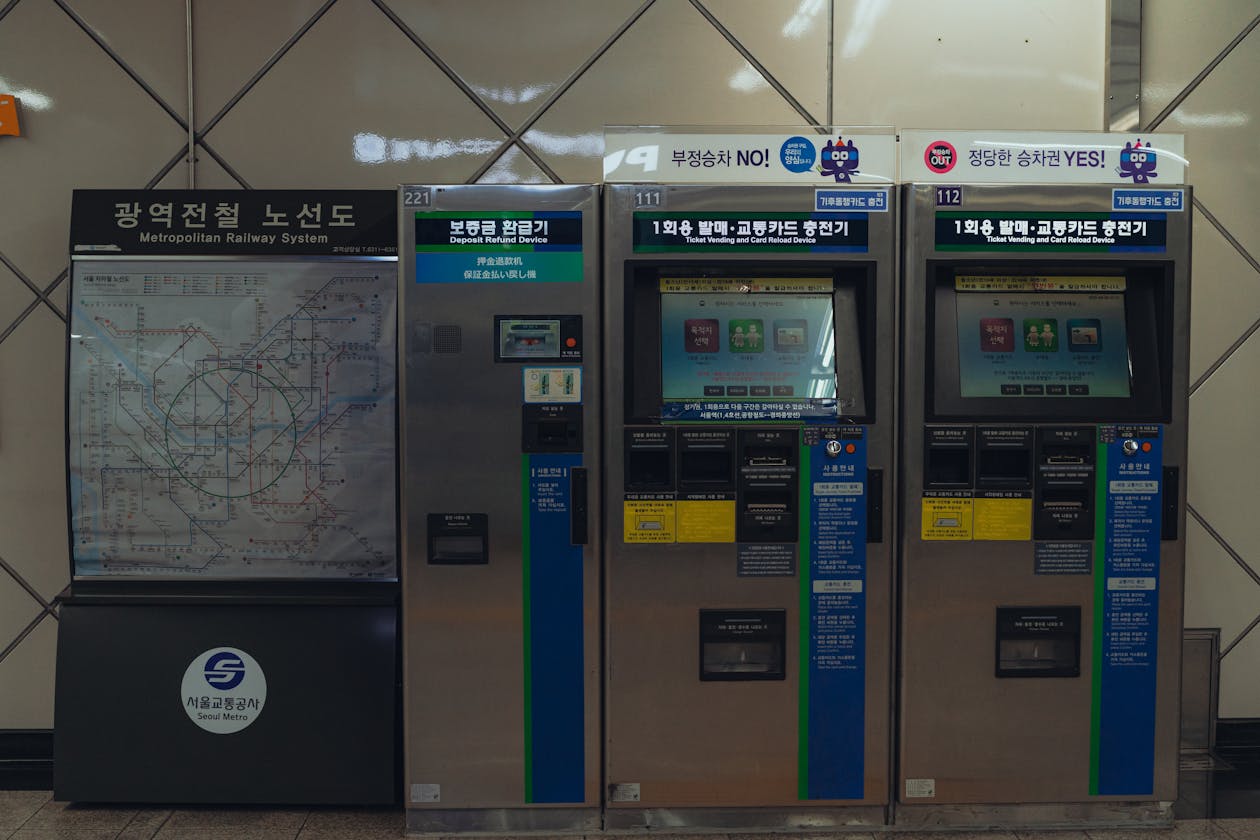
Photo by Pexels
| Feature | Climate Card | T-Money |
| Pricing | Flat daily/weekly rate | Pay per ride |
| Unlimited rides | Yes | No |
| Convenience store payments | No | Yes |
| Taxi payments | No | Yes |
| Works outside Seoul | No (Seoul only) | Yes (nationwide) |
| Best for | Heavy subway/bus users in Seoul | Mixed transport + purchases |
My recommendation: If you're spending most of your trip in Seoul, get the Climate Card for transit and keep a small amount of cash for other purchases. If you're traveling to Busan, Jeju, or other cities, you'll still need a T-Money card for those areas since the Climate Card only works within Seoul's transit system.
Important Things to Know
- Seoul only — the Climate Card does NOT work on subway lines that extend beyond Seoul's administrative boundary. For trips to Incheon or satellite cities, you'll need T-Money or a separate ticket.
- No top-up needed — unlike T-Money, you don't need to add money. Just choose your pass duration and go.
- Card deposit is refundable — return the card at a convenience store or designated kiosk to get your ₩3,000 deposit back.
- Bus transfers included — switching between subway and bus counts as one continuous trip, just like with T-Money.
Best Routes to Ride with Your Climate Card
Morning: Palaces and Tradition
Take the subway to Gyeongbokgung Station (Line 3). Walk through the palace, then head to Bukchon Hanok Village and Insadong on foot.
Afternoon: Trendy Neighborhoods
Hop on the subway to Seongsu Station (Line 2) for Seoul's most creative district. Browse concept stores, drink specialty coffee, and explore converted warehouse galleries.
Evening: River Views and Night Life
Take the bus or subway to Yeouido Hangang Park for sunset views along the Han River, then ride to Hongdae for live music, street performers, and late-night food.
Day Trip: Bukhansan Hiking
Ride to Gupabal Station (Line 3) and hike Bukhansan National Park — one of Seoul's best day hikes with granite peaks and panoramic city views. All transportation covered by your Climate Card.
Final Thoughts
The Climate Card is one of the most tourist-friendly additions to Seoul's transportation system in years. It makes navigating the city simpler, cheaper, and more spontaneous — you can hop on and off the subway without thinking about costs.
For anyone visiting Seoul in 2026, this card is a no-brainer. Pick one up at the airport or your nearest convenience store, and start exploring.
Useful links:
Visit Seoul Official Site
Korea Tourism Organization
Post a Comment